
As a manager, you cannot avoid having heard about psychological security. Perhaps you already "practice" psychological security today in your way of collaborating and in your way of managing your employees?
Many authors have written books on psychological safety. And a topic that is far from new. Many of us have experienced when psychological security abounds in a workplace and when it does not.
In her award-winning book The Fearless Organization*, Amy C. Edmondson has collected many years of theory and research on the subject. It is based on her considerations and my own experiences that I answer the following questions:
- Why psychological security is important?
- What is psychological safety and what is it not?
- What can be your next step to strengthen psychological safety?
Why is psychological safety important?
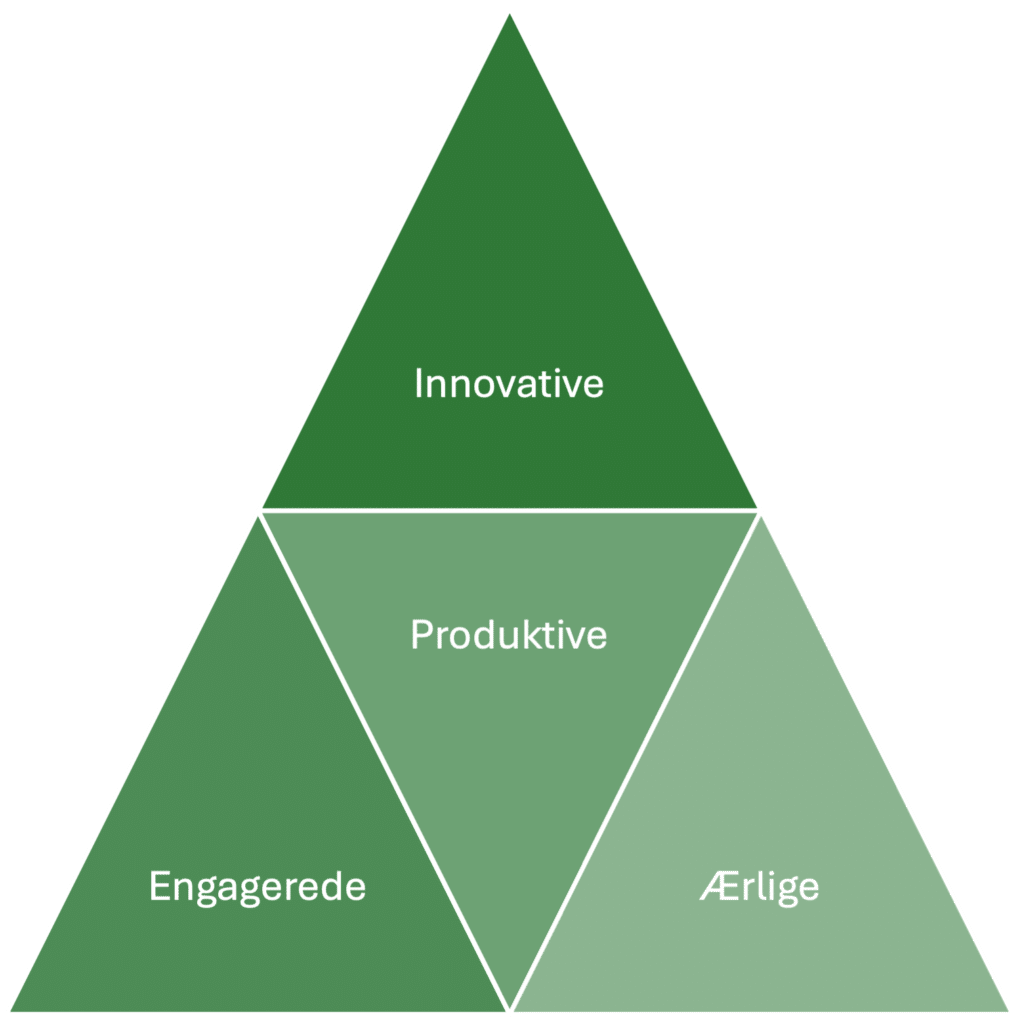
Both accidental discoveries and deliberate investigations in countless companies come to the same conclusion over and over again. In a workplace where there is psychological security, employees are more:

- Innovative
Employees feel comfortable sharing both mistakes and successes. The result can be quality improvements of core services and products. At the same time that relations between employees are strengthened. It also becomes easier to ask a colleague for help. Since the solution is no longer seen as dependent on a single individual, but that it is a team of colleagues who together find the best solution.
- Engaged
Employees feel listened to when they air new ideas or criticism. In other words, employees can sense that their contribution is important and decisive, as input influences their own and others' performance of work. Therefore, it automatically affects employee motivation. Employees become more engaged.
- Productive
When employees both become more engaged and create more ideas, which in one way or another create improvements, then the employees also become more productive for the company as a whole.
- Honest
In such a workplace, continuous feedback between colleagues is natural. Criticism is welcome and is seen as constructive and necessary input to find the best solutions to current challenges. This also means that as a manager you can be sure that you are surrounded by honest employees. The atmosphere creates resilience among employees, as they know they are safe. Silence therefore rarely exists.
What is psychological safety and what is it not?
Psychological security means that an employee: Can share all their attitudes, can openly talk about current challenges that can affect their own performance, share career plans, etc.
Therefore, the manager has a decisive role. Changing the leader of a team therefore has a direct impact and consequence on the psychological safety of employees.
Psychological safety is NOT a workplace where all employees and managers are eternally in agreement and happy.
Psychological safety does NOT mean that employees are flawless. Actually quite the contrary. Employees often dare to take greater risks to try out new ideas, as they know that this will not have decisive consequences for their employment.
What can your next step as a manager be to strengthen psychological safety?
De kommende 2 uger observer’ dine medarbejdere ved at stille dig følgende spørgsmål; og hvis du har flere teams, som arbejder uafhængig af hinanden, så gør det for hvert team:
- Do your employees share both mistakes and successes?
- Giver dine medarbejdere løbende feedback til hinanden?
- When you ask your employees questions, does it usually result in silence (or the same ones who answer) or in a lively debate?
- Does ONE particular employee influence changes/changes in the working climate?
If you would like sparring or advice, book here.
* Source: The fearless organization - create psychological security in the workplace and strengthen learning, innovation and growth. Translated by Annemette Goldberg, technical editor Christian Ørsted, 1st edition, 8th edition. 2020 by Djøf Forlag.